
Crystal Eye Authorisation Control for
Modern Infrastructure
Protect API workloads across hybrid cloud and AI environments
Crystal Eye delivers a single, policy-driven authorisation layer that secures APIs, microservices, containers, and AI environments, without slowing delivery.
Built for platform engineers, DevOps teams, cloud architects, security engineers, and infrastructure leaders managing Kubernetes, API sprawl, hybrid cloud, and distributed systems.
The Problem
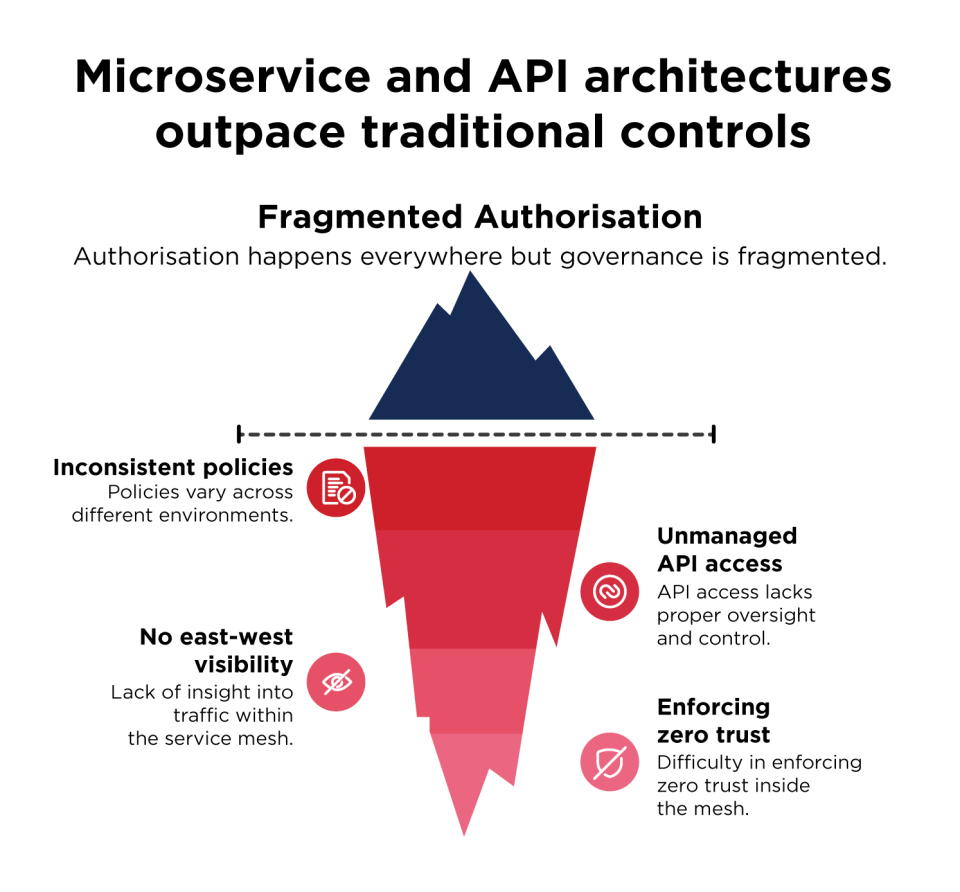
Microservice and API architectures move faster than traditional controls can keep up. Firewalls don’t understand workloads. IP rules don’t map to containers. Admission controllers drift. CI/CD pipelines push changes without governance. Infrastructure teams have lost control as developers now spin up containers, APIs, and environments without oversight, creating inconsistent configurations and security gaps. The result is messy as authorisation happens everywhere but governance is fragmented. Infra is still held responsible for uptime and security, yet they no longer have the visibility or authority to enforce standards.
This is exactly where attackers slip in and where compliance breaks down.
Most authorisation tools stop at policy enforcement.
Crystal Eye ties access control directly into Threat Detection, Investigation and Response (TDIR).
That means:
- No engineering overhead to integrate with SIEM or SOC
- Policy events flow straight into SOC, TDIR and NDR
- Microservice/API decisions become part of detection coverage
- SOC can correlate access failures, anomalies, and workloads instantly
You get authorisation and runtime security as one system - by design.
Crystal Eye Declarative Authorisation Service
Authorisation-as-Code for APIs, Workloads, and Cloud
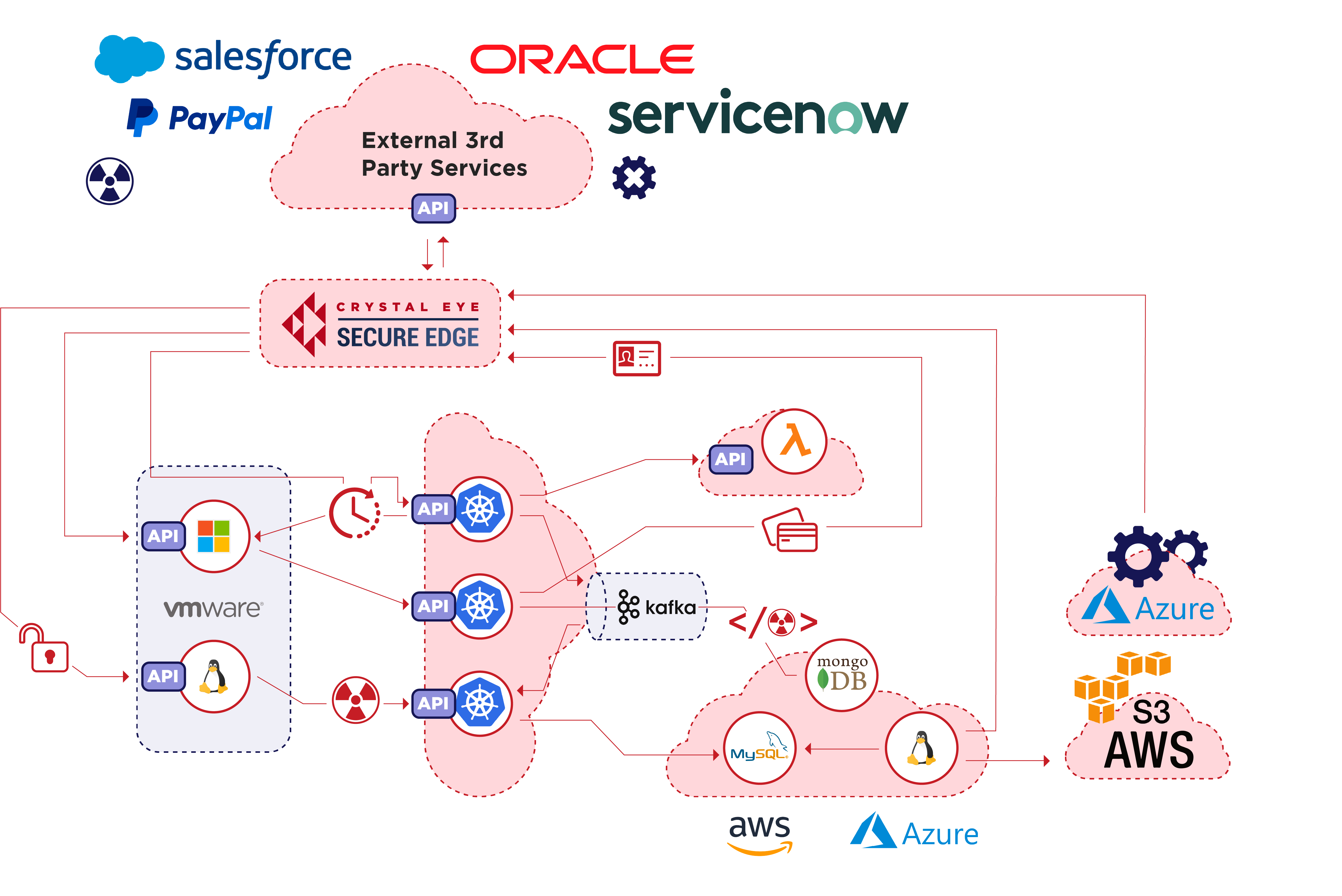
Define policies once and enforce them across Kubernetes, containers, APIs, serverless, and hybrid environments.
Replace IP-based controls with identity, context, and policy-as-code.
You Get:
- API and workload authorisation that travels with the service
- Admission control for Kubernetes and CI/CD
- Zero trust segmentation inside clusters
- Real-time policy decisions with full visibility

- A single policy plane across cloud, hybrid, and on-prem
No drift. No partial enforcement. No blind spots.
Built for How DevOps Actually Work
Built for How Infrastructure Teams Actually Works
When authorisation is enforced independently across cloud platforms and microservices, control becomes fragmented, auditability breaks down, and policy drift sets in. With multiple stakeholders operating at scale, access governance turns into a high-risk, operationally complex problem that directly impacts security posture and compliance.
Crystal Eye Declarative Authorisation Service solves these by:
All authorisation decisions integrate natively with the Crystal Eye SOC.
How it works
Discover
workloads, services, API flows
Define
policy-as-code using identity, labels, context
Enforce
consistently across cloud and on-prem
Observe
decisions and violations in real time
Feed
events directly into TDIR/SOC workflows
You get a living authorisation system, not static rules.
Outcomes
Built for AI and Modern Workloads
AI model control planes are a new attack surface. Crystal Eye Declarative Authorisation Service secures them without slowing delivery:
- Gate sensitive actions like deploy, retire, or rollback with approvals.
- Record every action: who, what, when, where.
- Block privileged containers and enforce least-privilege mounts.
- Apply egress allow-lists to stop shadow SaaS or data exfiltration.
- Enforce governance rules tied to model classification, lineage, and residency.
- Maintain a living inventory of signed approved images.
- Kill miner patterns, throttle risky API calls, and enforce budgets.

Why It Fits Inside
Crystal Eye Platform
Declarative Authorisation Service is more powerful because it doesn’t live alone. It’s part of a unified stack:
- TDIR for detection
- NDR for behavioural analytics
- SOC automation
- Firewalling, DLP, and cloud controls
Unify access governance across APIs, cloud, Kubernetes,
and AI—without slowing delivery.
Authorisation isn’t an island anymore.
It’s part of end-to-end governance and response.